RAFELRAND
Ebo Taylor sur scène, chantant au micro avec une guitare électrique, dans une illustration en papier déchiré orange, ambre et indigo.
Ebo Taylor sur scène. Du highlife en mineur, venu de la côte ghanéenne. Illustration d’après « Ebo Taylor KULT 01 » de Schorle, CC BY-SA 3.0, retravaillée avec Runway.

Essai · Musique & société

La rivière était là d’abord

Sur Ebo Taylor, et un Occident qui ne veut la musique africaine que comme tube ou comme trésor.

Saltpond est une ville de pêcheurs sur la côte du Ghana, à l’ouest d’Accra. Le matin, les pêcheurs s’assoient sur la plage pour réparer leurs filets, et en travaillant, ils chantent. Ebo Taylor y a vécu la plus grande partie de sa vie. Tout ce qu’il a joué, disait-il, est né de ces chants.

En 2010, un riff de guitare qu’il avait écrit en 1977 refait surface dans une chanson d’Usher et Ludacris. Le riff avait fait un long détour. En 2002, un collectionneur de disques britannique, Miles Cleret, avait parcouru le Ghana et en était revenu les bras chargés de vieux 45-tours et de 33-tours. « Heaven » de Taylor s’est retrouvé sur Ghana Soundz, la première parution de son nouveau label, Soundway. Un producteur qui travaillait avec Usher et Ludacris en possédait un exemplaire.

Taylor n’a pris aucune part à ce voyage. Sa musique a d’abord été déterrée comme un trésor. Puis vendue comme un tube. Lui, il était à Saltpond.

Jusqu’à cette année, je ne connaissais que sa musique. Quand il est mort en février, à quatre-vingt-dix ans, je me suis mis à lire. Et la question qui revenait sans cesse est celle que je pose depuis des années dans mes chroniques de musique africaine : l’Occident veut-il vraiment une musique africaine vivante ? Ou seulement le plus neuf de l’Afrique quand cela sonne comme un tube, et le plus ancien quand cela sonne comme un trésor ?

Deux appétits

Je vois deux appétits, et ils appartiennent au même estomac.

Le premier veut le tube. Il prend la musique africaine du présent et la rend prête à consommer pour l’Occident : un producteur occidental, un studio occidental, un remix pour les pistes de danse européennes. La voix peut rester africaine. L’emballage devient le nôtre.

Le second veut le trésor. Il fouille le passé : vieilles cassettes, bandes maîtresses perdues, rééditions en vinyle épais avec de longues notes de pochette. Dans les cercles occidentaux, cela passe pour du respect. Souvent, c’en est. Mais la question est de savoir pour qui l’on creuse.

Les deux appétits ont une chose en commun. Dans les deux cas, c’est l’Occident qui décide de ce à quoi la musique africaine a le droit de ressembler.

L’Occident veut l’Afrique comme tube ou comme trésor. Rarement comme musique vivante.
Illustration : Ebo Taylor, chapeau à carreaux, regarde par-dessus son épaule, guitare en main ; derrière lui, la silhouette sombre d’un guitariste.
Le musicien, et l’ombre que l’Occident a faite de lui. Illustration d’après « Ebo Taylor KULT 01 » de Schorle, CC BY-SA 3.0, retravaillée avec Runway.

Une confession

Avant d’aller plus loin, un aveu que je préférerais taire. L’une de mes chansons préférées est « African Woman » de Baaba Maal, sur Firin’ in Fouta, 1994. J’ai interviewé Baaba Maal. J’aime toujours ce disque. Et c’est exactement le genre de disque dont cet essai fait la critique.

J’écris ceci en auditeur occidental. Je fais partie de ce que je décris. Je préfère le dire d’emblée plutôt que de vous le laisser découvrir à mi-chemin.

Un son mûri au pays

Ebo Taylor est né Deroy Taylor à Cape Coast en janvier 1936, quand le Ghana était encore la Gold Coast, colonie britannique. Il appellerait plus tard ces années « the Hitler days » : des nuits de black-out, la peur des bombes allemandes, beaucoup de prières. Son père était instituteur et tenait l’orgue à l’église. Sa mère vendait le pain et les gâteaux qu’elle cuisait.

Enfant, il chantait dans la chorale. Les chants catholiques étaient en mineur, et c’est là, croyait-il, qu’est née son oreille pour le mineur. Autour de lui, aux funérailles et aux fêtes, il entendait des chants fanti dans le même mode : les chants funèbres, les chants de guerre des asafo, les chants des pêcheurs et des paysans. Les Britanniques avaient apporté des hymnes en majeur, et le highlife, la grande musique populaire du Ghana, les avait pour l’essentiel suivis. Taylor est revenu au mineur. Non comme un emprunt, mais comme un retour.

Sa chanson « Love and Death » vient d’un vieux proverbe akan, Odo o yewu : l’amour et la mort vont ensemble. Ce n’est pas un slogan sorti d’un studio occidental. C’est une philosophie de la côte où il a grandi.

À la fin des années cinquante, il joue chez les Stargazers, un orchestre de highlife mené par Teddy Osei et Sol Amarfio, qui fonderont plus tard Osibisa à Londres. Les dates exactes de ses débuts varient d’une source à l’autre, et lui-même les maniait avec souplesse. Je les laisse ainsi. Sa vie a été racontée plus qu’elle n’a été documentée, comme la musique dont elle vient.

Londres, 1962

Au début des années soixante, Taylor part étudier à Londres, à l’Eric Gilder School of Music. Les frais sont payés par le gouvernement de Kwame Nkrumah, qui voit dans les arts une pièce de la construction d’un Ghana libre. L’école se trouve dans Wardour Street, à Soho, en plein quartier des clubs. En 1964, le Marquee s’installe à côté.

Au Trinity College étudie un jeune trompettiste nigérian : Fela Ransome-Kuti. Les deux deviennent amis. Fela vient souvent dans l’appartement de Taylor à Willesden, où ils passent des heures à décortiquer les disques de Coltrane, de Miles Davis et de Charlie Parker. Et Fela lui pose sans cesse la même question.

« Fela me disait : “Pourquoi nous, les Africains, jouons-nous toujours du jazz ?” »

L’ironie veut que le jazz soit devenu plus tard central dans la musique de l’un comme de l’autre. Mais la question était l’essentiel. Non pas : que veut entendre Londres ? Mais : qu’est-ce qui est à nous ?

Londres, elle, n’écoutait pas. Les Anglais, racontait Taylor, aimaient le calypso et le ska, mais tenaient l’Afrique pour primitive, un endroit où les gens vivaient dans les arbres. Même des musiciens caribéens regardaient parfois les Africains de haut, comme s’ils sortaient tout droit de la jungle. On jouait du highlife à Londres, mais pour les Africains, comme un souvenir du pays.

Le véritable échange avait lieu ailleurs : entre deux Ouest-Africains, dans un appartement de Willesden, d’égal à égal.

Plus de « band boys »

De retour au Ghana au milieu des années soixante, Taylor remarque une chose qu’il ne peut plus accepter. On appelle les musiciens des « band boys ». Il se met à les appeler « musicians ». Un petit changement de mots, un grand changement de dignité.

Illustration : un chef d’orchestre en boubou et calotte imprimés désigne ses musiciens, esquissés à grands traits derrière un micro.
Des musiciens, pas des « band boys ». Illustration d’après « Ebo Taylor KULT 01 » de Schorle, CC BY-SA 3.0, retravaillée avec Runway.

Le regard colonial n’était pas qu’à Londres. Taylor racontait comment, dans les grandes villes, à Accra surtout, les anciens styles ghanéens avaient été oubliés pendant la colonisation, parce que les clubs passaient de la musique britannique. Cette attitude, disait-il, a survécu à l’indépendance. Sur la côte, à Saltpond, on n’a jamais oublié.

Il devient guitariste maison, arrangeur et producteur d’Essiebons, un label ghanéen, et façonne les disques d’une génération : Pat Thomas, C.K. Mann, Gyedu-Blay Ambolley. En 1977 paraît son propre album, avec « Heaven ». Sur scène, il ouvrait toujours par « Kwame », son hommage à Nkrumah.

Nkrumah avait un mot pour cela

En février 1966, Nkrumah est renversé par un coup d’État militaire pendant un voyage à l’étranger. L’année précédente, il avait publié un livre sur ce qu’il appelait le néocolonialisme : des États indépendants sur le papier, dont l’économie et la politique restent dirigées du dehors.

Le mot n’est pas une insulte venue d’Europe. C’est un concept ghanéen, forgé par l’homme qui a payé les études de Taylor. Et il décrit, avec une justesse inconfortable, ce qui est arrivé à la musique ghanéenne dans les décennies suivantes.

D’autres coups d’État ont suivi. Sous Jerry Rawlings, à partir de 1981, il y eut des couvre-feux, et une taxe à l’importation sur les instruments de musique qui faillit réduire le highlife au silence. Gyedu-Blay Ambolley a décrit plus tard un couvre-feu qui dura plus de deux ans. Les orchestres sont partis. Les DJ sont arrivés. Beaucoup des meilleurs musiciens ont filé vers l’Allemagne, où un nouveau son est né : le burger highlife, fait avec des musiciens et des ingénieurs européens. L’une de ses vedettes, Charles Amoah, expliquait que la structure des chansons devait se rapporter à ce que les Européens connaissaient déjà.

Voilà le premier appétit sous sa forme la plus crue. Pas un choix : une survie. La chanson africaine remodelée pour l’oreille européenne.

Taylor, lui, n’est pas parti. En 1980, il enregistre à Lagos un album, Palaver, d’une urgence politique que son œuvre avait rarement eue : il y chantait les soubresauts du Ghana après le coup d’État de 1979. Il dut quitter le Nigeria précipitamment et ne revit jamais les bandes. Elles dormirent près de quarante ans dans un entrepôt avant d’être retrouvées et publiées, en 2019.

Après un dernier album avec Pat Thomas en 1984, il cesse d’enregistrer sous son nom. Il travaille comme producteur et arrangeur, un temps en Côte d’Ivoire, et à partir de 2001 il enseigne à l’université du Ghana. Il y répète le même souci : son pays n’offre aucune vraie formation à la musique populaire et au jazz. En 2013, il s’interroge à voix haute sur les jeunes musiciens : « que feront-ils quand je ne serai plus là ? »

Un come-back pour ceux qui ne regardaient pas

Puis vinrent Soundway, et le riff sur le disque d’Usher. En 2010, Taylor publie Love and Death sur le label britannique Strut, enregistré avec l’Afrobeat Academy de Berlin. Son premier album distribué internationalement. Les médias occidentaux parlèrent d’un come-back.

Au Ghana, il n’était jamais parti. Il avait produit, arrangé, enseigné.

Un come-back n’existe que pour ceux qui ne regardaient pas.

Il faut être honnête ici. Taylor a savouré cette reconnaissance tardive, et il est allé la chercher. En 2020, CNN écrivait qu’on avait plus de chances de le voir sur une scène d’Amsterdam ou de Berlin que d’Accra ou de Lagos. Après un AVC en 2018, il s’envole encore pour les États-Unis : en 2022, à quatre-vingt-six ans, il y donne ses premiers concerts américains, à l’invitation du label Jazz Is Dead, et enregistre à Los Angeles un album, son fils Henry parmi les musiciens. Paru en janvier 2025, ce fut son dernier enregistrement studio. Ce n’était pas un saint resté au village. C’était un musicien de métier, qui prenait la scène qu’on lui offrait.

Mais il s’est aussi produit quelque chose de rare. À Berlin, des musiciens européens ont voyagé vers son idiome, et non l’inverse. Taylor lui-même l’avait remarqué : il y a peut-être aujourd’hui plus de groupes d’afrobeat en Europe qu’en Afrique de l’Ouest. Pour une fois, c’est l’Occident qui a fait le voyage. Il a seulement fallu attendre qu’il ait passé soixante-dix ans.
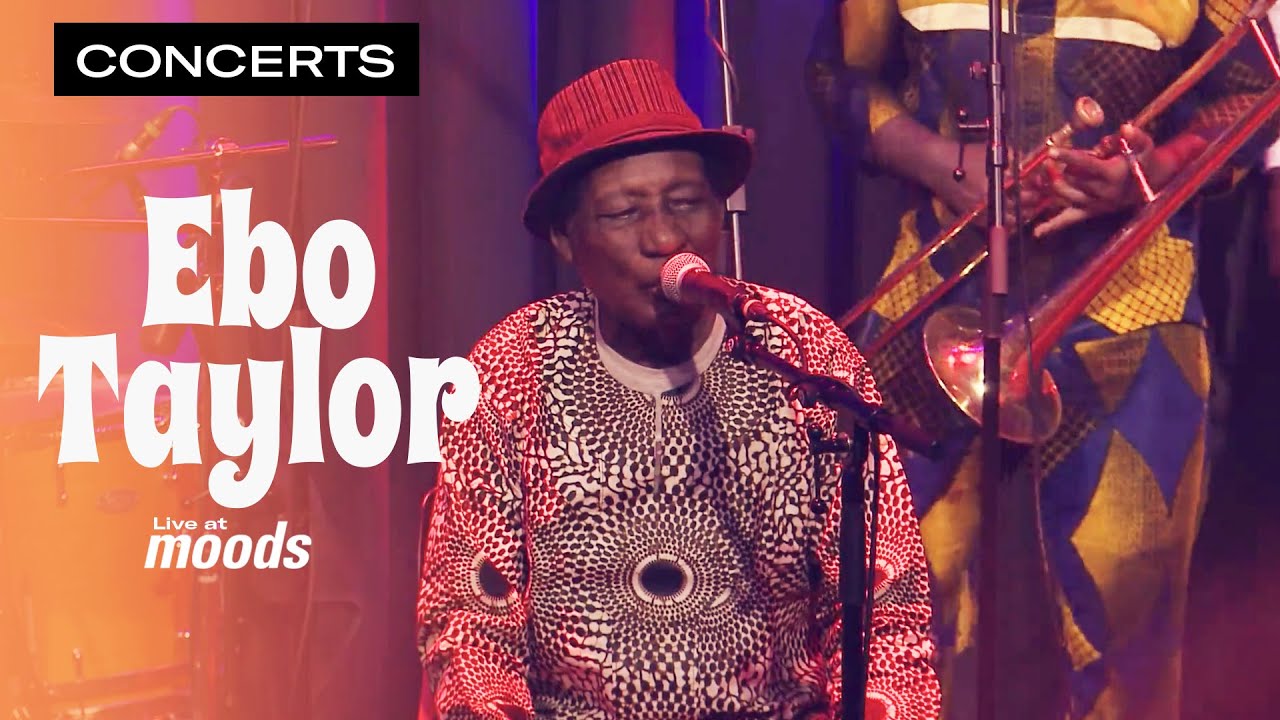
RegarderEbo Taylor sur YouTube
Appuyez sur lecture pour charger la vidéo depuis YouTube.

Dans les deux sens

L’histoire de Taylor devient plus tranchante quand on la pose à côté des stars africaines des années quatre-vingt et quatre-vingt-dix qui, elles, sont allées vers l’Ouest.

Mory Kanté, venu de Guinée, s’installe à Paris en 1984, parce qu’il veut le succès international. En 1987, « Yé ké yé ké » devient le premier 45-tours africain à dépasser le million d’exemplaires. Aux Pays-Bas, il reste deux semaines numéro un. La chanson est l’adaptation d’un chant de cour traditionnel mandingue. « Toutes les bonnes choses ont beaucoup de propriétaires », en disait Kanté.

Baaba Maal chantait en pulaar, et Firin’ in Fouta fut enregistré à Podor avant d’être achevé à Londres. Sur Nomad Soul, en 1998, sept producteurs se sont succédé, dont Brian Eno. Youssou N’Dour signa chez Virgin après la tournée d’Amnesty de 1988. Certains trouvèrent The Lion et Set trop occidentalisés. Set avait pourtant été fait d’abord pour le Sénégal, puis à peine remixé pour le reste du monde. Après Virgin, N’Dour déclara que ses disques seraient désormais les mêmes pour le Sénégal et pour tous les autres.

L’âme restait africaine. La forme devenait occidentale. Voilà le premier appétit.

Et puis l’histoire se retourne. Le producteur britannique Joe Boyd, homme de grand goût et de bonnes intentions, raconte dans son livre de 2024 sur la world music comment il a tenté de convaincre N’Dour de revenir aux instruments traditionnels et à une production simple. N’Dour voulait sonner moderne. Des années plus tard, Fatoumata Diawara dira presque la même chose : elle veut un son moderne, parce que c’est le monde dans lequel elle vit.

L’Occident ne pousse donc pas seulement l’Afrique vers le tube. Il pousse tout aussi fort vers le trésor : sois authentique, sois traditionnel, sois l’Afrique que nous imaginons. Deux exigences opposées. Une seule présomption.

Les deux fois, c’est l’Occident qui décide de ce à quoi la musique africaine a le droit de ressembler.

N’Dour a dit depuis qu’il ne regrette rien. Je le crois. Mais regardez ce qu’il a fait. Après The Guide, en 1994, il a tourné son attention vers le Sénégal et y a développé son label et ses médias, autour du studio de Dakar où il enregistrait déjà. Quand je l’ai rencontré à Rotterdam, le roi du mbalax n’a laissé aucun doute sur l’emplacement de son royaume. Pas un regret. Un retour.

Qui invite qui

Comment distinguer une concession d’un choix ? J’utilise quatre questions. Qu’est-ce qui reste intact ? Est-ce le choix conscient de l’artiste ? Le trafic va-t-il dans les deux sens ? Et qui invite qui ?

Massa (2026) de Fatoumata Diawara est un disque pop en bambara, fait avec la star française -M-. Dans ma chronique, j’ai parlé d’une rencontre à sens unique : elle est venue vers nous, lui n’a pas bougé vers elle. Je le pense toujours. Mais j’ai aussi écrit qu’il avait pris le contrôle artistique complet, et c’était faux : la direction était partagée, et elle a coproduit. Diawara dit elle-même vouloir reconfirmer sa propre vision de la musique malienne, et que sa musique « n’est pas celle qu’on attendait du Mali ». Ce n’est pas quelqu’un qui cède. C’est quelqu’un qui choisit.

Tinariwen a jadis diffusé sa musique sur cassettes, à travers un Sahara sans poste, en acte de résistance. Quand le groupe a publié Idrache en 2024, un recueil de vieilles démos, j’ai écrit qu’il fouillait ces mêmes bandes en quête d’une preuve de son authenticité. Chassés du Mali par la guerre, ils ont ensuite enregistré Hoggar à Tamanrasset, leur premier album fait là-bas, dans le studio du jeune groupe touareg Imarhan. Des Africains dans un studio bâti par d’autres Africains. Et sur Amadjar, en 2019, les moments les plus frappants n’étaient pas les invités occidentaux ajoutés à distance, mais les chansons avec la griotte mauritanienne Noura Mint Seymali, pour lesquelles le groupe avait voyagé près de deux semaines jusqu’à un campement près de Nouakchott. Des Africains qui voyagent vers des Africains.

Et puis il y a The Cavemen, deux frères de Lagos qui jouent du highlife, la musique de Taylor, pour une génération élevée aux Afrobeats. Sur Cavy in the City, ils travaillent avec Londres, mais à leurs conditions. Comme je l’écrivais dans ma chronique : non pas Lagos qui essaie d’atteindre Londres, mais Lagos qui invite Londres à participer. Londres comme amplificateur, pas comme arbitre du goût.

Il y a une complication que je ne peux pas taire. L’« Occident » qui écoute cette musique en streaming, c’est pour une large part la diaspora africaine elle-même, à Peckham et ailleurs, parce qu’au Nigeria, pour beaucoup, le streaming est tout simplement trop cher. L’appétit que je décris n’est pas seulement un appétit blanc. Cela rend la question plus difficile. Cela la rend aussi plus panafricaine.

Taylor voyait lui-même le pont vers la nouvelle génération. En 2020, il disait vouloir travailler avec les rappeurs ghanéens M.anifest et Reggie Rockstone. Pas un producteur occidental. Des rappeurs ghanéens.

Des studios à soi, des labels à soi, des oreilles à soi

Ceci n’est pas un réquisitoire contre l’Occident. C’est un plaidoyer pour quelque chose.

Pour Essiebons, le label ghanéen où Taylor a façonné le son d’une génération. Pour Faisal Helwani, l’un des fondateurs du syndicat des musiciens ghanéens, dont l’argent, disait Taylor, a aidé à le mettre sur pied. Pour le studio et le label de Youssou N’Dour à Dakar. Pour une industrie qui se construit depuis Lagos. Pour l’enseignement musical que Taylor n’a cessé de réclamer, afin que les jeunes n’aient plus à aller à Londres pour apprendre ce qu’est l’harmonie.

Nkrumah a payé à Taylor des études d’harmonie à Londres pour qu’il les rapporte au pays. C’était le panafricanisme fait politique musicale : pars, apprends, reviens, construis.

L’Occident peut apporter la caisse. Pas la mesure.

La rivière

Sur son album Appia Kwa Bridge figure une chanson, « Nsu na Kwan », la rivière et le pont. Taylor en expliquait la philosophie : la rivière était là avant le pont. La rivière est l’œuvre de Dieu. Le pont, celle des hommes. La rivière est l’aînée.

Taylor a bâti des ponts toute sa vie : entre les chants fanti et le jazz, entre Saltpond et Londres, entre le highlife et le funk, entre les années soixante-dix et le hip-hop. Mais il n’a jamais pris le pont pour la rivière.

Illustration : portrait d’Ebo Taylor, chapeau et lunettes noires, entouré d’ondes sonores indigo.
La rivière était là d’abord. Illustration d’après « Ebo Taylor » de Sylvain lasco, CC BY-SA 4.0, retravaillée avec Runway.

Le 6 février 2026, le festival Ebo Taylor est lancé à l’Alliance française d’Accra, avec une édition plus grande prévue à Saltpond. Le lendemain, Ebo Taylor meurt à l’hôpital de Saltpond. Il avait quatre-vingt-dix ans ; son anniversaire datait d’un mois. Le 1er août, il a été enterré à Saltpond, après un service en l’église méthodiste Wesley.

Il n’a pas été découvert par l’Occident. Il a été célébré par les Ghanéens, au Ghana, de son vivant.

Quel musicien africain connaissiez-vous avant que l’Occident ne le découvre ? Et pourquoi pas, au juste ?

Sources

Ebo Taylor : vie et musique

Ghana : politique et déclin de la musique vivante

Redécouverte

Autres artistes

Chroniques de l’auteur (Maxazine)

L’auteur a interviewé Youssou N’Dour et Baaba Maal pour des travaux antérieurs. Les citations issues d’entretiens tiers proviennent des sources listées ci-dessus. Les trois premières illustrations d’après « Ebo Taylor KULT 01 » de Schorle, sous licence CC BY-SA 3.0, retravaillées avec Runway ; le portrait final d’après « Ebo Taylor » de Sylvain lasco, sous licence CC BY-SA 4.0, retravaillé avec Runway. Les illustrations retravaillées sont diffusées sous les mêmes licences.

L’auteur

Portrait de Jan Vranken

Jan Vranken écrit sur la musique depuis quarante ans, sous toutes ses formes. Il a réalisé sa première interview en 1983, avec la légende néerlandaise de la guitare Jan Akkerman, et s’est entretenu depuis avec un éventail d’artistes hors du commun : 10cc, Alan Parsons, Marillion et Fish, Toto, Bryan Ferry, OMD, Steve Vai, Sass Jordan, Fun Lovin’ Criminals, Hooverphonic et The Delines ; les légendes du studio Danny Kortchmar et Leland Sklar ; Avishai Cohen, Grand Corps Malade, Wolfgang Niedecken et Fatal Flowers ; et, pour l’Afrique, Youssou N’Dour, Salif Keita, Femi Kuti, Habib Koité, Souad Massi, Didier Awadi, Daara J Family et Orchestra Baobab. Pour son émission de radio Wat voor Wereld, il a interviewé Baaba Maal au Drum Rhythm Festival d’Amsterdam, et la fédération néerlandaise de radiodiffusion OLON a nommé l’émission pour le prix du meilleur programme de musiques du monde.

Il interviewe aussi aisément en néerlandais qu’en anglais ou en français. Sa spécialité est la musique d’Afrique de l’Ouest, une région qu’il connaît aussi par vingt-cinq ans de travail de terrain international en Afrique de l’Ouest, au Moyen-Orient et en Afrique centrale, et il est invité à intervenir au Dakar Music Expo 2027. Il écrit pour Maxazine et Writerz Block, et publie aussi sur Rafelrand des essais sur la liberté, le corps et la tolérance. Il est le fondateur de Miet Kerbusch. De vergeten Dichteres, le site consacré à la poétesse limbourgeoise oubliée. Il vit dans le sud des Pays-Bas avec sa femme Marthe, qui lui rappelle régulièrement que sa prononciation du wolof laisse encore à désirer.

BlueskyFacebook

Une réaction ? Écrivez à Jan : jlmvranken@icloud.com.

Ebo Taylor on stage, singing at the microphone with an electric guitar, in an illustration of torn paper in orange, amber and indigo.
Ebo Taylor on stage. Highlife in a minor key, from the coast of Ghana. Illustration after “Ebo Taylor KULT 01” by Schorle, CC BY-SA 3.0, adapted with Runway.

Essay · Music & Society

The River Came First

On Ebo Taylor, and a West that only wants African music as a hit or as a treasure.

Saltpond is a fishing town on the coast of Ghana, west of Accra. In the morning the fishermen sit on the beach mending their nets, and while they work, they sing. Ebo Taylor lived there for most of his life. Those songs, he said, were where everything he played began.

In 2010 a guitar riff he had written in 1977 turned up in a song by Usher and Ludacris. The riff had taken a long way round. In 2002 a British record collector, Miles Cleret, had travelled through Ghana and come home with armfuls of old singles and LPs. Taylor’s “Heaven” ended up on Ghana Soundz, the first release on Cleret’s new label, Soundway. A producer working with Usher and Ludacris owned a copy.

Taylor had no part in that journey. First his music was dug up as a treasure. Then it was sold as a hit. The man himself was in Saltpond.

Until this year I knew only his music. When he died in February, at ninety, I started reading. And the question that kept coming back is the one I have been asking in my reviews of African music for years: does the West actually want living African music? Or only the newest from Africa when it sounds like a hit, and the oldest when it sounds like a treasure?

Two hungers

I see two appetites, and they belong to the same stomach.

The first wants the hit. It takes African music of the present and makes it ready for Western consumption: a Western producer, a Western studio, a remix for the European dancefloor. The voice may stay African. The packaging becomes ours.

The second wants the treasure. It digs in the past: old cassettes, lost master tapes, reissues on heavy vinyl with long liner notes. In Western circles this counts as respect. Often it is. But the question is who the digging is for.

Both hungers have one thing in common. In both cases the West decides what African music may sound like.

The West wants Africa as a hit or as a treasure. Rarely as living music.
Illustration: Ebo Taylor in a checked hat looks back over his shoulder, guitar in hand; behind him a dark silhouette of a guitarist.
The musician, and the shadow the West made of him. Illustration after “Ebo Taylor KULT 01” by Schorle, CC BY-SA 3.0, adapted with Runway.

A confession

Before I go on, something I would rather not admit. One of my favourite songs is “African Woman” by Baaba Maal, from Firin’ in Fouta, 1994. I have interviewed Baaba Maal. I still love that record. And it is exactly the kind of record this essay is critical of.

I am writing this as a Western listener. I am part of what I am describing. I would rather say that at the start than have you discover it halfway through.

A sound that ripened at home

Ebo Taylor was born Deroy Taylor in Cape Coast in January 1936, when Ghana was still the British colony of the Gold Coast. He later called those years “the Hitler days”: nights of blackout, fear of German bombs, a lot of praying. His father was a schoolteacher who played the organ in church. His mother baked bread and cakes to sell.

As a boy he sang in the church choir. The Catholic chants were in the minor key, and he believed that is where his ear for minor began. Around him, at funerals and festivals, he heard Fante songs in the same mode: the funeral songs, the war songs of the asafo, the songs of fishermen and farmers. The British had brought hymns in the major key, and highlife, the great popular music of Ghana, mostly followed them. Taylor went back to the minor. Not as an import, but as a return.

His song “Love and Death” comes from an old Akan saying, Odo o yewu: love and death go together. That is not a slogan from a Western studio. That is a philosophy from the coast where he grew up.

In the late fifties he played in the Stargazers, a highlife band led by Teddy Osei and Sol Amarfio, who would later found Osibisa in London. The exact dates of Taylor’s early career shift from source to source, and he was flexible with them himself. I will leave it that way. His life was told more than it was documented, like the music it came from.

London, 1962

In the early sixties Taylor went to London to study at the Eric Gilder School of Music. The fees were paid by the government of Kwame Nkrumah, who saw the arts as part of building a free Ghana. The school was in Wardour Street, in Soho, in the middle of clubland. In 1964 the Marquee club moved in next door.

At Trinity College a young Nigerian trumpeter was studying: Fela Ransome-Kuti. The two became friends. Fela often came to Taylor’s flat in Willesden, where they spent hours analysing records by Coltrane, Miles Davis and Charlie Parker. And Fela kept asking him the same question.

“Fela used to say to me, ‘Why are we Africans always playing jazz?’”

The irony is that jazz later became central to the music of both of them. But the question was the point. Not: what does London want to hear? But: what is ours?

London itself was not listening. The English, Taylor said, liked calypso and ska, but thought of Africa as primitive, a place where people lived in trees. Even Caribbean musicians sometimes looked down on the Africans, as if they had come straight from the jungle. Highlife was played in London, but for Africans, as a reminder of home.

The real exchange happened elsewhere: between two West Africans in a flat in Willesden, as equals.

No more band boys

When Taylor came back to Ghana in the mid-sixties, he noticed something he could no longer accept. Musicians were called “band boys”. He started calling them musicians. A band practice became a rehearsal. A small change of words, and a large one of dignity.

Illustration: a bandleader in a patterned robe and cap points towards his musicians, sketched in loose lines behind a microphone.
Musicians, not band boys. Illustration after “Ebo Taylor KULT 01” by Schorle, CC BY-SA 3.0, adapted with Runway.

The colonial gaze was not only in London. Taylor described how in the big towns, in Accra above all, the old Ghanaian styles had been forgotten during the colonial era, because the clubs played British music. That attitude, he said, continued after independence. Along the coast, in Saltpond, they never forgot.

He became the in-house guitarist, arranger and producer of Essiebons, a Ghanaian label, and shaped the records of a generation: Pat Thomas, C.K. Mann, Gyedu-Blay Ambolley. In 1977 he released his own album, with “Heaven” on it. When he played live, he always opened with “Kwame”, his tribute to Nkrumah.

Nkrumah had a word for it

In February 1966 Nkrumah was overthrown in a military coup while he was abroad. The year before, he had published a book on what he called neo-colonialism: states that are independent on paper, while their economy and politics are still directed from outside.

The word is not an insult from Europe. It is a Ghanaian concept, from the man who paid for Taylor’s education. And it describes, uncomfortably well, what happened to Ghanaian music in the decades that followed.

More coups came. Under Jerry Rawlings, from 1981, there were curfews, and an import duty on musical instruments that nearly silenced highlife. Gyedu-Blay Ambolley later described a curfew that lasted more than two years. The bands left. The DJs came. Many of the best musicians went to Germany, and there a new sound emerged: burger highlife, made with European musicians and engineers. One of its stars, Charles Amoah, explained that the structure of the songs had to relate to what the Europeans already knew.

That is the first hunger in its rawest form. Not a choice, but survival: the African song reshaped for the European ear.

Taylor did not go. In 1980 he recorded an album in Lagos, Palaver, with a political urgency his earlier work rarely had. It was about the upheaval in Ghana after the 1979 coup. He had to leave Nigeria in a hurry and never saw the tapes again. They lay in a warehouse for almost forty years before they were found and released in 2019.

After a last album with Pat Thomas in 1984 he stopped recording under his own name. He worked as a producer and arranger, for a time in Côte d’Ivoire, and from 2001 he taught at the University of Ghana. There he kept raising the same concern: there was no proper education in popular music and jazz in his country. In 2013 he wondered aloud about the young musicians: “what are they going to do if I’m gone?”

A comeback for those who weren’t looking

Then came Soundway, and the riff on Usher’s record. In 2010 Taylor released Love and Death on the British label Strut, recorded with the Afrobeat Academy from Berlin. It was his first internationally distributed album. Western media called it a comeback.

In Ghana he had never been away. He had produced, arranged, taught.

A comeback only exists for those who weren’t looking.

I have to be honest here. Taylor enjoyed his late recognition, and he went after it. In 2020 CNN wrote that he was more likely to be seen on stage in Amsterdam or Berlin than in Accra or Lagos. After a stroke in 2018 he still flew to the United States: in 2022, at 86, he gave his first American concerts at the invitation of the label Jazz Is Dead, and recorded an album in Los Angeles, his son Henry among the musicians. Released in January 2025, it became his last studio recording. He was not a saint who stayed home. He was a working musician who took the stage he was given.

But something also happened that rarely happens. In Berlin, European musicians travelled to his idiom, not the other way round. Taylor himself noticed it: there may now be more Afrobeat bands in Europe than in West Africa. For once, the West made the journey. It only took until he was past seventy.

WatchEbo Taylor on YouTube
Press play to load the video from YouTube.

Both ways

Taylor’s story becomes sharper when you put it next to the African stars of the eighties and nineties who did go West.

Mory Kanté from Guinea moved to Paris in 1984, because he wanted international success. In 1987 “Yé ké yé ké” became the first African single to sell more than a million copies. In the Netherlands it was number one for two weeks. The song was an adaptation of a traditional Manding courtship song, sung in Mandinka. “All good things have many owners,” Kanté said about it.

Baaba Maal sang in Pulaar, and Firin’ in Fouta was recorded in Podor before it was finished in London. On Nomad Soul, in 1998, seven producers worked on the album, Brian Eno among them. Youssou N’Dour signed with Virgin after the Amnesty tour of 1988. Some found The Lion and Set too Westernised. Set had been made for Senegal first and was only lightly remixed for the rest of the world. After Virgin, N’Dour declared that his records would from then on be the same for Senegal as for everyone else.

The soul stayed African. The form became Western. That is the first hunger.

And then the story turns. The British producer Joe Boyd, a man of great taste and good intentions, describes in his 2024 book on world music how he tried to persuade N’Dour to go back to traditional instruments and simple production. N’Dour wanted to sound modern. Years later Fatoumata Diawara would say almost the same thing: she wanted a modern sound because that is the world she lives in.

So the West does not only push Africa towards the hit. It pushes just as hard towards the treasure: be authentic, be traditional, be the Africa we imagine. Two opposite demands. One single assumption.

Both times the West decides what African music may sound like.

N’Dour has since said he regrets nothing. I believe him. But look at what he did. After The Guide in 1994 he turned his attention to Senegal, building out his own label and his own media around the Dakar studio where he had already been recording. When I spoke with him in Rotterdam, the king of mbalax left no doubt about where his kingdom lay. Not regret. A return.

Who invites whom

How do you tell a concession from a choice? I use four questions. What stays untouched? Is it the artist’s own, conscious choice? Does the traffic go both ways? And who invites whom?

Fatoumata Diawara’s Massa (2026) is a pop record in Bambara, made with the French pop star -M-. When I reviewed it, I called it a one-way meeting: she came towards us, and he did not move towards her. I still think that. But I also wrote that he took over complete artistic control, and that was wrong: the direction was shared, and she co-produced. Diawara herself says she wanted to reconfirm her own vision of Malian music, and that her music is “not the kind of music they were expecting from Mali”. That is not someone giving in. That is someone choosing.

Tinariwen once distributed their music on cassettes through a Sahara without a postal service, as an act of resistance. When the band released Idrache in 2024, a collection of old demos, I wrote that they were searching those same tapes for proof of their authenticity. Driven out of Mali by the war, they then recorded Hoggar in Tamanrasset, their first album made there, in the studio of the younger Tuareg band Imarhan. Africans recording in a studio other Africans built. And on Amadjar, in 2019, the most striking moments were not the Western guests patched in from afar, but the songs with the Mauritanian griotte Noura Mint Seymali, for which the band travelled almost two weeks to a desert camp near Nouakchott. Africans travelling to Africans.

And then there are The Cavemen, two brothers from Lagos who play highlife, Taylor’s music, for a generation raised on Afrobeats. On Cavy in the City they work with London, but on their own terms. As I wrote in my review: not Lagos trying to reach London, but Lagos inviting London to take part. London as amplifier, not as tastemaker.

There is a complication I cannot leave out. The “West” that streams this music is to a large extent the African diaspora itself, in Peckham and elsewhere, because for many people in Nigeria streaming is simply too expensive. The appetite I am describing is not only a white appetite. That makes the question harder. It also makes it more pan-African.

Taylor himself saw the bridge to the new generation. In 2020 he said he wanted to work with the Ghanaian rappers M.anifest and Reggie Rockstone. Not a Western producer. Ghanaian rappers.

Own studios, own labels, own ears

This is not an argument against the West. It is an argument for something.

For Essiebons, the Ghanaian label where Taylor shaped the sound of a generation. For Faisal Helwani, one of the founders of the Ghanaian musicians’ union, whose money, Taylor said, helped set it up. For Youssou N’Dour’s studio and label in Dakar. For an industry that builds from Lagos. For the music education Taylor kept asking for, so that the young would not have to go to London to learn what harmony is.

Nkrumah paid for Taylor to learn harmony in London so that he could bring it home. That was pan-Africanism as music policy: go, learn, come back, build.

The West may bring the till. Not the yardstick.

The river

On his album Appia Kwa Bridge there is a song called “Nsu na Kwan”, the river and the bridge. Taylor explained its philosophy: the river was there before the bridge. The river was made by God. The bridge was made by people. The river is the elder.

Taylor built bridges all his life: between Fante songs and jazz, between Saltpond and London, between highlife and funk, between the seventies and hip-hop. But he never mistook the bridge for the river.

Illustration: portrait of Ebo Taylor in a hat and dark glasses, surrounded by sound waves in indigo.
The river was there first. Illustration after “Ebo Taylor” by Sylvain lasco, CC BY-SA 4.0, adapted with Runway.

On 6 February 2026 the Ebo Taylor Festival was launched at the Alliance Française in Accra, with a larger edition planned for Saltpond. The next day, Ebo Taylor died in Saltpond hospital. He was ninety; his birthday had been a month earlier. On 1 August he was buried in Saltpond, after a service at the Wesley Methodist Church.

He was not discovered by the West. He was celebrated by Ghanaians, in Ghana, while he was still alive to hear it.

Which African musician did you know before the West discovered them? And why, exactly, not?

Sources

Ebo Taylor: life and music

Ghana: politics and the decline of live music

Rediscovery

Other artists

The author’s own reviews (Maxazine)

The author interviewed Youssou N’Dour and Baaba Maal for earlier work. Quotations from interviews by others are taken from the sources listed above. The first three illustrations after “Ebo Taylor KULT 01” by Schorle, licensed under CC BY-SA 3.0, adapted with Runway; the closing portrait after “Ebo Taylor” by Sylvain lasco, licensed under CC BY-SA 4.0, adapted with Runway. The adapted illustrations are shared under the same licences.

About the author

Portrait of Jan Vranken

Jan Vranken has been writing about music for four decades, in every form it takes. He did his first interview in 1983, with Dutch guitar legend Jan Akkerman, and has since sat down with an extraordinary range of artists: 10cc, Alan Parsons, Marillion and Fish, Toto, Bryan Ferry, OMD, Steve Vai, Sass Jordan, Fun Lovin' Criminals, Hooverphonic and The Delines; session legends Danny Kortchmar and Leland Sklar; Avishai Cohen, Grand Corps Malade, Wolfgang Niedecken and Fatal Flowers; and, from Africa, Youssou N'Dour, Salif Keita, Femi Kuti, Habib Koité, Souad Massi, Didier Awadi, Daara J Family and Orchestra Baobab. For his radio programme Wat voor Wereld he interviewed Baaba Maal at the Drum Rhythm Festival in Amsterdam, and the Dutch broadcasting federation OLON nominated the show for best world music programme.

He interviews as easily in Dutch as in English or French. His speciality is West African music, a region he also knows from twenty-five years of international fieldwork across West Africa, the Middle East and Central Africa, and he has been invited to speak at the Dakar Music Expo 2027. He writes for Maxazine and Writerz Block, and on Rafelrand he also writes essays on freedom, the body and tolerance. He is the founder of Miet Kerbusch. De vergeten Dichteres, the website devoted to the forgotten Limburg poet. He lives in the south of the Netherlands with his wife Marthe, who regularly reminds him that his Wolof pronunciation still needs work.

BlueskyFacebook

Responses? Write to Jan at jlmvranken@icloud.com.

More essaysAll essays →
Essay · Music & AIThe Algorithm Has No Ear for the Griot2 October 2026Essay · Society · English & DutchLane Four28 September 2026Essay · PrivacyThe Cloakroom Problem18 August 2026Essay · Poetry · English & DutchThe Dike and the Flood21 July 2026
More album reviewsAll reviews →
Nadine El Roubi, Life Is Beautiful Again album coverNadine El RoubiLife Is Beautiful Again★★★Little Angels, Big Bad & Back (EP) album coverLittle AngelsBig Bad & Back (EP)★★★★Orchestra Baobab, Made in Senegal album coverOrchestra BaobabMade in Senegal★★★★½Pabllo Vittar, Lost in Lust album coverPabllo VittarLost in Lust★★½

Never miss a review

Leave your email address and you'll hear from Rafelrand as soon as a new review or essay is online.

Only used to tell you about new posts. No spam, never shared. Unsubscribe with a single reply.