In Sudan, hibiscus is not a flower you put in a vase. It is karkadé, the deep red tea that is poured in almost every household, hot in winter and ice-cold in summer. So when Nadine El Roubi tells an interviewer that "Hibiscus" was the first song she wrote for this album, in 2023, it is worth stopping at the date. 2023 is the year her family's house in Khartoum was destroyed. The word Sudan doesn't appear anywhere on Life Is Beautiful Again. The hibiscus does, and for anyone who knows what it means, it is the reddest thing on the record.
That is the paradox of this debut album, and I want to take it seriously, because it would be easy not to. On first listen, this is a soft, warm, very American neo-soul record by a Brooklyn singer. On second listen, it is the record of a Sudanese woman who has decided not to sing about Sudan. Those are two different albums, and the distance between them is where this review lives.
Fairfax, Khartoum, Maastricht, Brooklyn
Nadine El Roubi was born in Khartoum in the mid-Nineties, to an Egyptian-Sudanese mother and an Iranian-Sudanese father. When she was one, the family moved to Fairfax, Virginia, just outside Washington. When she was ten, they moved back. That return falls almost exactly on the 2005 peace agreement that ended Sudan's long north-south war, the moment when the diaspora came home and Khartoum briefly opened up. Her father is a DJ, and by every indication the DJ: Taha Elroubi, who spun records in the Washington and New York clubs of the late Eighties and later founded Capital 91.6 FM, Sudan's first English-language music station. Capital became a home for the young Sudanese rappers whose music would soundtrack the 2019 revolution. His daughter remembers him driving her to school in Khartoum, rapping "Rapper's Delight" to her word for word.
After secondary school in Khartoum, she studied liberal arts for three years at University College Maastricht, took a gap year in Sudan, did a master's in creative writing in Birmingham and then worked her way through Amman, Aswan and Cairo, behind a camera and in marketing. Music came late and through a side door: freestyles on Instagram, "#FEMALE" in 2020, a re-post from SZA, the EP Triplicity in 2022. Then she moved to the United States to make music her job, first to a friend's futon outside Boston, and in July 2024 to Brooklyn.
On 15 April 2023, war broke out in Khartoum between the army and the Rapid Support Forces. Her mother, her youngest sister and her grandmother fled by road, a journey of forty-eight hours, to Alexandria. Their house was destroyed. Her father had moved to Jordan for work two weeks earlier. In those first days, when the world's media were slow to notice, she posted a freestyle called "#EyesOnSudan". It was furious, direct and outward-facing, like almost everything she made before this album.
The word Sudan doesn't appear anywhere on this record. The hibiscus does.
Three postcodes around the Capitol
Here a second story opens, and it's the one that made me sit up. The DMV, the Washington area that takes in DC, Maryland and Virginia, has one of the largest Sudanese communities in the United States. Nadine El Roubi grew up there. So did Oddisee, born in Washington in 1985 to a Sudanese father from Omdurman and raised in Prince George's County, Maryland. So, for that matter, did the poet Safia Elhillo, who describes herself as Sudanese by way of Washington. Three artists, two generations, the same three postcodes around the Capitol. And in the years Oddisee was a toddler, Nadine's father was playing records in those same Washington clubs.
I have written about Oddisee often, most recently about From Takoma With Love, his album with Heno. this spring. On "Round The Way" he raps about his father surviving the janjaweed in Sudan, and the credits say, in black and white, Free Sudan. Musically he lives in another house altogether: jazzier, looser, old school, a flow with the unhurried ease of the West Coast on a foundation that is pure DC. But he answered the question this album raises long ago. He once explained that he learned an American genre in an American city, and that it would be a strange detour to suddenly make that East Coast music "Sudanese". Sudan is in there, he says, but in places a general audience misses: the syncopation of a drum pattern, a detail only a Sudanese ear will catch.
That is exactly the choice Nadine El Roubi makes here, and it deserves to be called a choice rather than a loss. Her generation in Khartoum grew up on Capital FM, on American hip-hop and R&B. What a Western ear hears as "Sudanese", the oud, the pentatonic swing of the old masters, is her mother's golden age, not her own childhood. The difference with Oddisee is the direction. Six months ago, he put the war in his credits. She puts it in a flower.
A record in a Cleo Sol world
So what does it sound like? Like a record made in a world where Inflo set the temperature. Inflo had nothing to do with this album, let me be clear about that, but anyone who has lived with Cleo Sol's Rose in the Dark or Heaven will recognise the climate: hushed, warm, devotional, voice in front, beats that don't push. The two women share their mothers, Lauryn Hill and Erykah Badu, and they share an arc. Sault went from the political fury of Untitled (Black Is) to Untitled (God); Cleo Sol made two albums that are almost entirely prayer. Nadine El Roubi travels the same road in four years, from "#FEMALE" and "#EyesOnSudan" to an album that opens with "Prayer" and closes with "Grace". Her own label puts it plainly: where her earlier work was political, defiant and outward-facing, this one turns inward.
Her voice is up to it. It is soft without being thin, she phrases like a rapper even when she sings, and when she drops into a few spoken bars you remember where she comes from. The writing is good, sometimes very good. The problem is what sits underneath.
Eight composers, seven tracks
The credits tell the story before a single note does. On the seven tracks whose credits I could trace, I count eight different composers, and not one instrumentalist. Part of the album came out of a writing camp the label organised in France in 2024; the rest was written over three years in four cities. You can hear it. This is a beatmaker's record: separate productions, mostly from the Berlin circle around her label, onto which she laid her voice.
And those beats are the weak spot. "Garden" is the clearest case: dry, flat, uneventful. You don't need a producer for a beat like that; GarageBand on a laptop would do, and might do better. "Hibiscus" is a step up as a beat, but the sound stays parched, as if the song has been pressed between the pages of a book. That these were the two singles the label chose to introduce the album says something about the gap between what sells a record and what makes one.
The best album on this record lasts about six minutes, and it was made by people playing together.
Because the album I want is already on here, in three places. On "Star", "Be" and "صافية" ("Safia"), something happens that the rest of the record lacks: air, wood, people. All three have the Iraqi-Canadian rapper and producer Narcy, the album's executive producer, among the composers, and two bring in New York musicians. Guitarist Chris Mazuera is one of the writers of "Star", and Nory, her partner on this spring's punk-rap EP Nuclear, co-wrote "Be". "Safia" is a short poem by Safia Elhillo herself, set to music by Narcy: the DMV line from Washington to Brooklyn, literally on the record. These are the best tracks on the album, and it's not hard to hear why. Someone is playing.
There's a catch even there. "Star" is the most beautiful thing here, and also the place where her influences are most audible. You can hear Lauryn, you can hear Erykah, you can hear the London of Cleo Sol, almost note for note. It's a lovely song in someone else's coat.
In the run-up to the release she told an interviewer that her best show ever was this August in Battery Park, by the water, with the Statue of Liberty on the horizon, playing the new songs with a band. She said she had never played a show feeling so aligned. I believe her. The album I kept wishing for has existed at least once, for an evening, at the bottom of Manhattan.
Treasure and hit
One more thing, because it goes beyond this record. Life Is Beautiful Again comes out on Jakarta Records in Berlin. The same people run Habibi Funk, the label that has spent the past decade bringing Sudan's golden age back into print: Kamal Keila, The Scorpions & Saif Abu Bakr, Sharhabil Ahmed, the king of Sudanese jazz. They do it well, and fairly: the artists or their families get half of the profits. But put the two catalogues side by side and you see something larger than one label. Sudan's past is sold in the West as a treasure, dusty vinyl from a lost Khartoum. Sudan's present is sold as smooth American neo-soul. What falls between them is the living scene, the rappers who filled the square in 2019 and now make music in exile in Cairo, Kampala and Nairobi. The record shops, meanwhile, file Nadine El Roubi under "World". Not because of the music, but because of the passport.
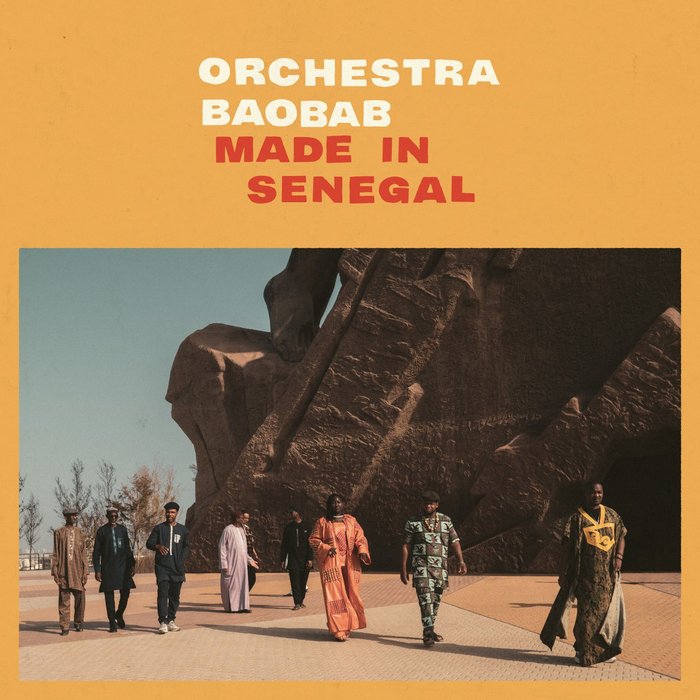
That is not her fault, and it is not this album's subject. But it is the field she plays in. Last week on this site, Orchestra Baobab called their album Made in Senegal, recorded every note of it in Dakar and released it on a Senegalese label. This album was made in four cities and belongs, for now, to none of them.
Beautiful again, for whom?
Which brings me back to the title. Life Is Beautiful Again is a statement of faith, and I don't doubt that she means it. But "again" presupposes something ugly, and the ugliest thing in her life these past three years has a name and a date. The title is spoken by someone for whom life can indeed become beautiful again: in Brooklyn, on a stage by the water, with an American future. For her mother in Alexandria, and for the more than ten million Sudanese who have been driven from their homes, there is no "again" yet. Is that a reproach? I don't think so. She doesn't claim to speak for Sudan here; she sings about herself, and that may be the most honest position available to her. But it is the question this record leaves hanging, and it is a better question than most albums manage to ask.
So why three stars?
Because this is good, but uneven. Better production, with the musicians who light up "Star" and "Be" carrying the whole record instead of three tracks, would have been worth half a star on its own. A more headstrong approach, one that starts from her own strength rather than from her heroes, would have been worth another half. Nadine El Roubi is still looking for her own sound, and for her own place between Khartoum and Brooklyn. That takes rest and reflection. You don't become authentic in a few years.
The voice is there. The stories are there. The hibiscus is there. Now she needs a room with a band in it, and the nerve to stop sounding like the people she loves.
The verdict
★★★A warm, devotional neo-soul debut with a fine voice and a Sudanese heart hidden in plain sight. But the beats are too dry, the influences too audible, and the best of it, on “Star”, “Be” and “Safia”, lasts barely six minutes. A promise more than a statement.
Au Soudan, l’hibiscus n’est pas une fleur que l’on met dans un vase. C’est le karkadé, l’infusion rouge sombre que l’on sert dans presque chaque foyer, brûlante en hiver, glacée en été. Alors quand Nadine El Roubi raconte que « Hibiscus » est la première chanson qu’elle a écrite pour cet album, en 2023, il faut s’arrêter sur la date. 2023, c’est l’année où la maison familiale de Khartoum a été détruite. Le mot Soudan n’apparaît nulle part sur Life Is Beautiful Again. L’hibiscus, si ; et pour qui sait ce qu’il signifie, c’est ce qu’il y a de plus rouge sur ce disque.
C’est le paradoxe de ce premier album, et je veux le prendre au sérieux, parce qu’il serait facile de passer à côté. À la première écoute, c’est un disque de néo-soul doux, chaleureux et très américain, signé par une chanteuse de Brooklyn. À la deuxième, c’est le disque d’une femme soudanaise qui a décidé de ne pas chanter le Soudan. Ce sont deux albums différents, et c’est dans l’écart entre les deux que se loge cette critique.
Fairfax, Khartoum, Maastricht, Brooklyn
Nadine El Roubi est née à Khartoum au milieu des années 1990, d’une mère égypto-soudanaise et d’un père irano-soudanais. Elle a un an quand la famille part s’installer à Fairfax, en Virginie, aux portes de Washington. Elle en a dix quand elle rentre. Ce retour coïncide presque exactement avec l’accord de paix de 2005 qui met fin à la longue guerre entre le Nord et le Sud, le moment où la diaspora revient et où Khartoum s’entrouvre brièvement. Son père est DJ, et selon toute vraisemblance le DJ : Taha Elroubi, qui mixait dans les clubs de Washington et de New York à la fin des années 1980 avant de fonder Capital 91.6 FM, la première radio musicale anglophone du Soudan. Capital est devenue un refuge pour les jeunes rappeurs soudanais dont la musique allait accompagner la révolution de 2019. Sa fille se souvient de lui la conduisant à l’école, à Khartoum, en lui rappant « Rapper’s Delight » mot pour mot.
Après le lycée à Khartoum, elle étudie trois ans les arts libéraux au University College de Maastricht, prend une année sabbatique au Soudan, fait un master d’écriture créative à Birmingham, puis passe par Amman, Assouan et Le Caire, derrière une caméra et dans le marketing. La musique arrive tard, par une porte de côté : des freestyles sur Instagram, « #FEMALE » en 2020, un partage de SZA, l’EP Triplicity en 2022. Puis elle part aux États-Unis pour faire de la musique son métier, d’abord sur le futon d’une amie près de Boston, puis, en juillet 2024, à Brooklyn.
Le 15 avril 2023, la guerre éclate à Khartoum entre l’armée et les Forces de soutien rapide. Sa mère, sa plus jeune sœur et sa grand-mère fuient par la route, quarante-huit heures de voyage, jusqu’à Alexandrie. Leur maison est détruite. Son père était parti travailler en Jordanie deux semaines plus tôt. Dans ces premiers jours, quand les médias du monde tardent à réagir, elle publie un freestyle intitulé « #EyesOnSudan ». Il est furieux, frontal, tourné vers l’extérieur, comme presque tout ce qu’elle a fait avant cet album.
Le mot Soudan n’apparaît nulle part sur ce disque. L’hibiscus, si.
Trois codes postaux autour du Capitole
Ici s’ouvre une deuxième histoire, et c’est elle qui m’a fait dresser l’oreille. Le DMV, la région de Washington qui englobe le district, le Maryland et la Virginie, abrite l’une des plus grandes communautés soudanaises des États-Unis. Nadine El Roubi y a grandi. Oddisee aussi, né à Washington en 1985 d’un père soudanais d’Omdourman et élevé dans le comté de Prince George, dans le Maryland. Et la poétesse Safia Elhillo, qui se dit soudanaise « via Washington ». Trois artistes, deux générations, les trois mêmes codes postaux autour du Capitole. Et dans les années où Oddisee était tout petit, le père de Nadine passait des disques dans ces mêmes clubs de Washington.
J’ai souvent écrit sur Oddisee, dernièrement sur From Takoma With Love, son album avec Heno. paru ce printemps. Sur « Round The Way », il rappe sur son père qui survit aux janjawids au Soudan, et les crédits disent, noir sur blanc, Free Sudan. Musicalement, il habite une tout autre maison : plus jazzy, plus relâché, old school, un flow à la nonchalance de la côte Ouest sur des fondations cent pour cent DC. Mais il a répondu depuis longtemps à la question que pose cet album. Il a expliqué un jour qu’il avait appris un genre américain dans une ville américaine, et que ce serait un drôle de détour que de rendre soudain « soudanaise » cette musique de la côte Est. Le Soudan est là, dit-il, mais à des endroits qu’un public lambda ne remarque pas : la syncope d’un motif de batterie, un détail que seule une oreille soudanaise saisira.
C’est exactement le choix que fait ici Nadine El Roubi, et il mérite d’être appelé un choix plutôt qu’une perte. À Khartoum, sa génération a grandi avec Capital FM, avec le hip-hop et le R&B américains. Ce qu’une oreille occidentale entend comme « soudanais », l’oud, le balancement pentatonique des anciens maîtres, c’est l’âge d’or de sa mère, pas sa propre enfance. Ce qui la distingue d’Oddisee, c’est la direction. Il y a six mois, il mettait la guerre dans ses crédits. Elle la met dans une fleur.
Un disque dans un monde à la Cleo Sol
À quoi ça ressemble, alors ? À un disque fait dans un monde où Inflo a fixé la température. Inflo n’a rien à voir avec cet album, que les choses soient claires, mais quiconque a vécu avec Rose in the Dark ou Heaven de Cleo Sol reconnaîtra le climat : feutré, chaleureux, dévotionnel, la voix devant, des beats qui ne poussent pas. Les deux femmes partagent leurs mères, Lauryn Hill et Erykah Badu, et elles partagent une trajectoire. Sault est passé de la colère politique d’Untitled (Black Is) à Untitled (God) ; Cleo Sol a fait deux albums qui sont presque entièrement des prières. Nadine El Roubi parcourt le même chemin en quatre ans, de « #FEMALE » et « #EyesOnSudan » à un album qui s’ouvre sur « Prayer » et se referme sur « Grace ». Son propre label le dit sans détour : là où ses disques précédents étaient politiques, rebelles et tournés vers l’extérieur, celui-ci regarde vers l’intérieur.
Sa voix est à la hauteur. Douce sans être mince, elle phrase comme une rappeuse même quand elle chante, et quand elle glisse quelques mesures parlées, on se souvient d’où elle vient. L’écriture est bonne, parfois très bonne. Le problème, c’est ce qu’il y a dessous.
Huit compositeurs, sept titres
Les crédits racontent l’histoire avant même la première note. Sur les sept titres dont j’ai pu retrouver les crédits, je compte huit compositeurs différents, et pas un seul instrumentiste. Une partie de l’album est née d’un camp d’écriture organisé par le label en France en 2024 ; le reste a été écrit en trois ans, dans quatre villes. Ça s’entend. C’est un disque de beatmakers : des productions séparées, venues pour la plupart du cercle berlinois de son label, sur lesquelles elle a posé sa voix.
Et ces beats sont le point faible. « Garden » en est l’exemple le plus net : sec, plat, sans relief. On n’a pas besoin d’un producteur pour un beat pareil ; GarageBand sur un ordinateur portable ferait l’affaire, et peut-être mieux. « Hibiscus » est un cran au-dessus côté beat, mais le son reste desséché, comme si la chanson avait été mise à sécher entre les pages d’un livre. Que le label ait choisi ces deux titres comme singles pour présenter l’album en dit long sur l’écart entre ce qui vend un disque et ce qui le fait vivre.
Le meilleur album de ce disque dure environ six minutes, et il a été fait par des gens qui jouent ensemble.
Car l’album que j’attends est déjà là, à trois endroits. Sur « Star », « Be » et « صافية » (« Safia »), il se passe ce qui manque au reste du disque : de l’air, du bois, des gens. Les trois comptent parmi leurs compositeurs le rappeur et producteur irako-canadien Narcy, producteur exécutif de l’album, et deux font entrer des musiciens new-yorkais. Le guitariste Chris Mazuera est l’un des auteurs de « Star », et Nory, sa complice sur l’EP punk-rap Nuclear paru ce printemps, cosigne « Be ». « Safia » est un court poème de Safia Elhillo elle-même, mis en musique par Narcy : la ligne du DMV, de Washington à Brooklyn, littéralement gravée sur le disque. Ce sont les meilleurs titres de l’album, et il n’est pas difficile d’entendre pourquoi. Quelqu’un joue.
Même là, il y a un bémol. « Star » est le plus beau moment du disque, et aussi celui où ses influences s’entendent le plus. On y entend Lauryn, on y entend Erykah, on y entend le Londres de Cleo Sol, presque note pour note. C’est une jolie chanson dans le manteau de quelqu’un d’autre.
Avant la sortie, elle a confié que son plus beau concert avait eu lieu en août à Battery Park, au bord de l’eau, la statue de la Liberté à l’horizon, à jouer les nouvelles chansons avec un groupe. Elle dit ne s’être jamais sentie aussi alignée sur scène. Je la crois. L’album que je n’ai cessé d’espérer a existé au moins une fois, le temps d’une soirée, à la pointe de Manhattan.
Trésor et tube
Encore une chose, parce qu’elle dépasse ce disque. Life Is Beautiful Again sort chez Jakarta Records, à Berlin. Les mêmes personnes dirigent Habibi Funk, le label qui depuis dix ans remet en circulation l’âge d’or soudanais : Kamal Keila, The Scorpions & Saif Abu Bakr, Sharhabil Ahmed, le roi du jazz soudanais. Ils le font bien, et honnêtement : les artistes ou leurs familles touchent la moitié des bénéfices. Mais posez les deux catalogues côte à côte et vous voyez quelque chose de plus grand qu’un label. Le passé du Soudan se vend en Occident comme un trésor, du vinyle poussiéreux d’un Khartoum disparu. Le présent du Soudan se vend comme de la néo-soul américaine bien lisse. Ce qui tombe entre les deux, c’est la scène vivante, les rappeurs qui remplissaient la place en 2019 et font aujourd’hui de la musique en exil, au Caire, à Kampala, à Nairobi. Les disquaires, eux, rangent Nadine El Roubi au rayon « World ». Pas à cause de la musique, mais à cause du passeport.
Ce n’est pas sa faute, et ce n’est pas le sujet de cet album. Mais c’est le terrain sur lequel elle joue. La semaine dernière, sur ce site, Orchestra Baobab appelait son album Made in Senegal, en enregistrait chaque note à Dakar et le sortait sur un label sénégalais. Cet album-ci a été fait dans quatre villes et n’appartient, pour l’instant, à aucune d’elles.
Belle à nouveau, pour qui ?
Ce qui me ramène au titre. Life Is Beautiful Again est une profession de foi, et je ne doute pas qu’elle y croie. Mais « à nouveau » suppose quelque chose de laid, et la chose la plus laide de sa vie ces trois dernières années a un nom et une date. Le titre est prononcé par quelqu’un pour qui la vie peut effectivement redevenir belle : à Brooklyn, sur une scène au bord de l’eau, avec un avenir américain. Pour sa mère à Alexandrie, et pour les plus de dix millions de Soudanais chassés de chez eux, il n’y a pas encore de « à nouveau ». Est-ce un reproche ? Je ne crois pas. Elle ne prétend pas parler au nom du Soudan ; elle chante sur elle-même, et c’est peut-être la position la plus honnête qui s’offre à elle. Mais c’est la question que ce disque laisse en suspens, et c’est une meilleure question que celles que posent la plupart des albums.
Alors, pourquoi trois étoiles ?
Parce que c’est bon, mais inégal. Une meilleure production, avec les musiciens qui illuminent « Star » et « Be » portant tout le disque plutôt que trois titres, aurait valu à elle seule une demi-étoile. Une approche plus têtue, qui parte de sa propre force plutôt que de ses idoles, en aurait valu une autre. Nadine El Roubi cherche encore son propre son, et sa propre place entre Khartoum et Brooklyn. Cela demande du calme et de la réflexion. On ne devient pas authentique en quelques années.
La voix est là. Les histoires sont là. L’hibiscus est là. Il lui faut maintenant une pièce avec un groupe dedans, et le culot de cesser de ressembler à ceux qu’elle aime.
Le verdict
★★★Un premier album de néo-soul chaleureux et dévotionnel, porté par une belle voix et un cœur soudanais caché en pleine lumière. Mais les beats sont trop secs, les influences trop audibles, et le meilleur, sur « Star », « Be » et « Safia », dure à peine six minutes. Une promesse plus qu’une affirmation.